Books
Comic History of the United States.
Bill Nye’s illustrated satirical history turns major episodes of the American past into brisk, deadpan comic sketches.
Choose an edition






Tracked, signed-for delivery on every order
Send it back if it didn't land
Every book on the shelf has been read by at least one of us
Pairs with this
About this book
Comic History of the United States is one of those nineteenth-century books that explains itself almost immediately: Bill Nye takes the familiar milestones of American history and retells them with deadpan exaggeration, mock dignity, and a steady refusal to behave like a solemn textbook. First published in 1894 and illustrated throughout by Frederick Burr Opper, the book belongs to the Gilded Age world of newspaper humor, cartoon satire, and briskly performative prose. Columbus, the colonies, the Revolution, the Civil War, and public life more broadly are all treated not as marble legends but as material for comic deflation.
What makes the book more than a novelty is the way the writing and drawings work together. Nye’s jokes depend on cadence, mock-heroic phrasing, and cheerful overstatement, while Opper’s illustrations sharpen the punch lines with visual caricature. Read now, the book offers both entertainment and a clear look at how late nineteenth-century American humor repackaged national history for a mass audience. It is especially rewarding for readers interested in illustrated books, comic Americana, newspaper-era wit, and the long tradition of retelling public history through satire rather than reverence.
Why this book still reads well
The appeal is not factual authority but comic method. Nye writes as if every historical episode were one rhetorical step away from a tall tale, and the book moves quickly because it never lingers too long in one register. Instead, it keeps converting names and events that can feel overfamiliar into scenes of social comedy, vanity, bureaucracy, improvisation, and absurd self-importance. That rhythm makes it accessible even for readers who do not usually seek out nineteenth-century humor.
Illustration and reader value
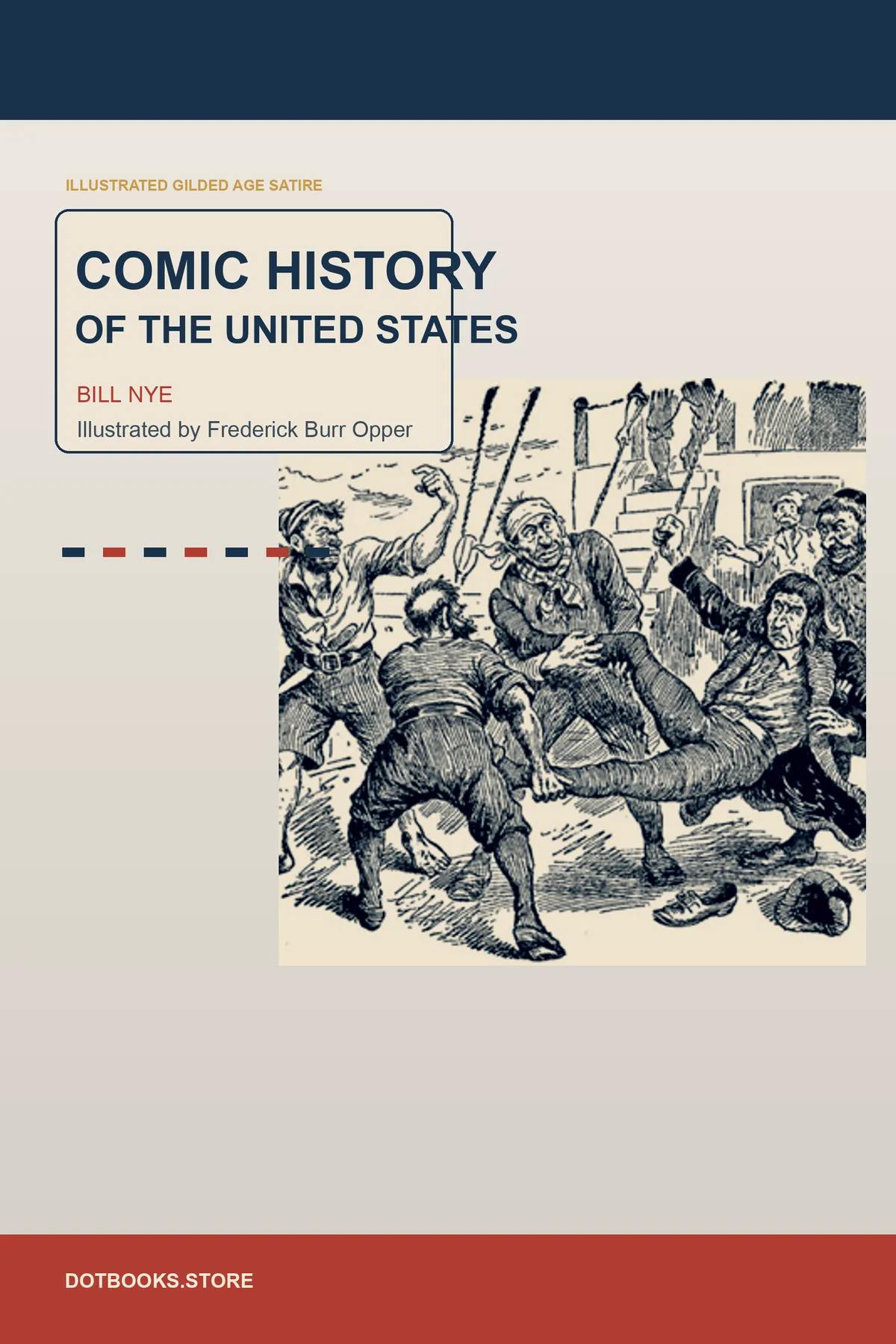
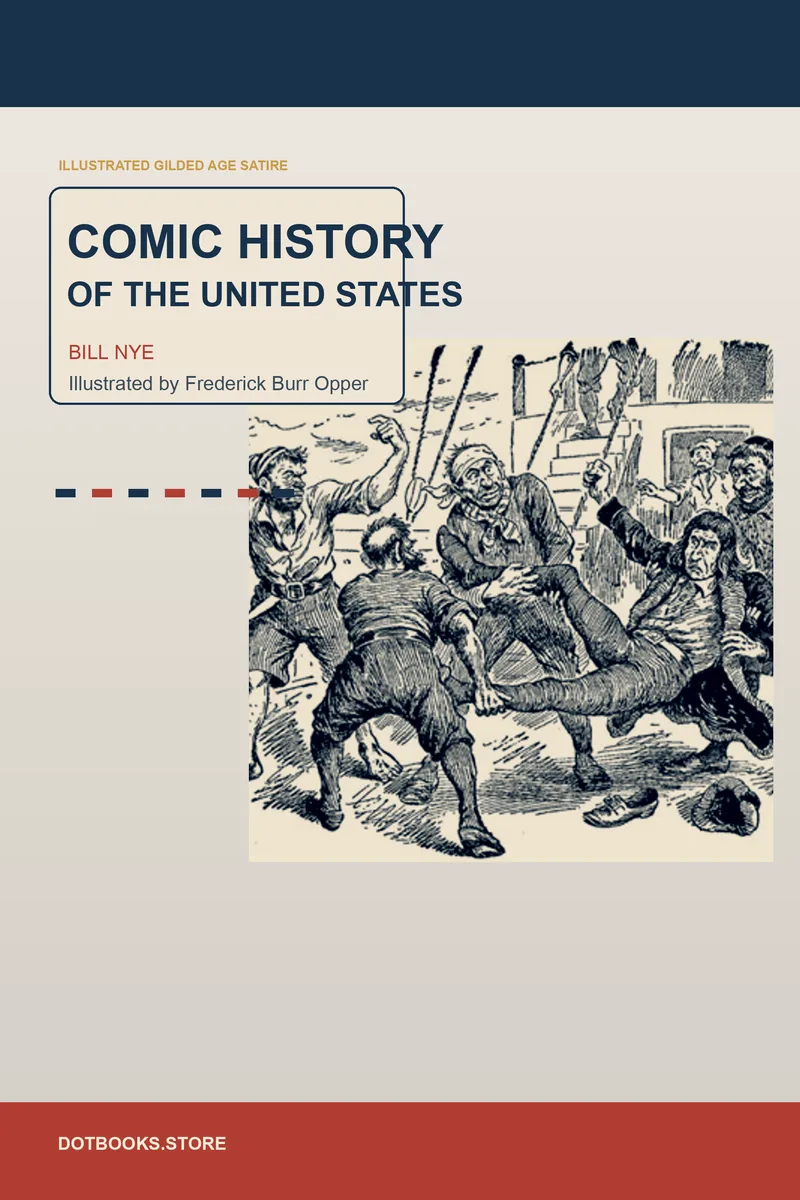
This DotBooks edition preserves the book’s interior illustrations because they are central to the reading experience rather than decorative extras. Opper’s caricatures do real narrative work: they frame scenes, puncture grandiosity, and extend Nye’s tone from sentence to image. Together, text and illustration show how comic publishing could reshape historical memory into something lighter, faster, and more openly performative.
Context for modern readers
Readers should approach the book as a period satire, not as a neutral history. Its humor comes from exaggeration, caricature, and the conventions of 1890s magazine and newspaper comedy, and some of its assumptions are unmistakably of their time. Read with that context in mind, it becomes a revealing artifact of American comic culture as well as an entertaining example of how historical storytelling can be mischievous instead of dutiful.
Reader fit
This edition is a strong match for readers of literary humor, illustrated classics, Americana, media history, and unusual public-domain nonfiction. It also suits anyone building a shelf of books that sit between history, satire, and cartoon art.
Story preview
Tap to flip through the cover, snippets, and details.
 Comic History of the United States
You might also like
Readers who picked this also reached for.



Picking up where you left off