Books
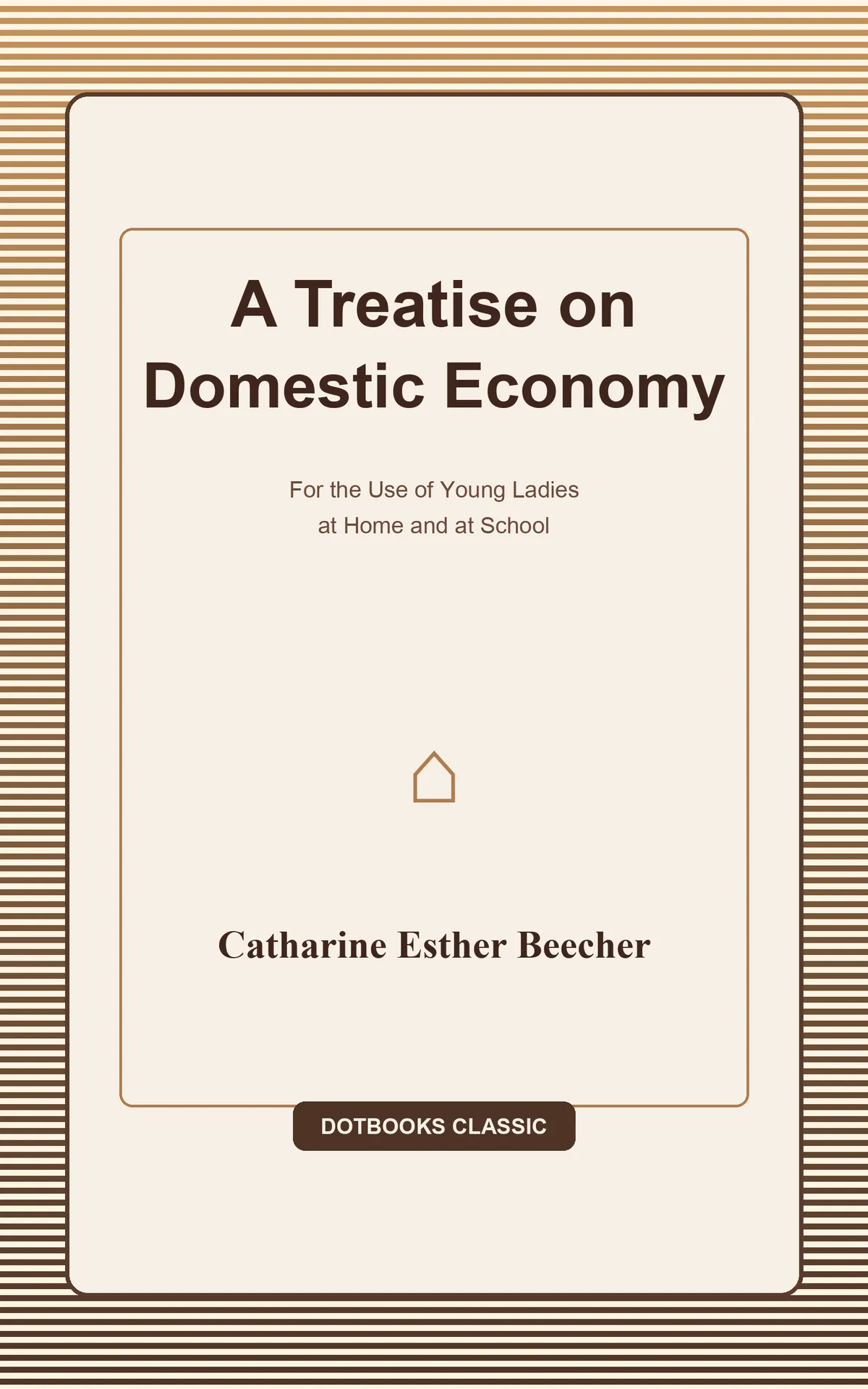
A Treatise on Domestic Economy; For the Use of Young Ladies at Home and at School.
Catharine Esther Beecher’s influential nineteenth-century manual blends household management, health guidance, moral instruction, and practical advice for domestic life and education.
Choose an edition






Tracked, signed-for delivery on every order
Send it back if it didn't land
Every book on the shelf has been read by at least one of us
Edition details
- Catharine Esther Beecher
- DotBooks
- DotBooks
- January 1845
- Paperback
- Standard white
- 480
- en
- DotBooks edition
Pairs with this
About this book
A foundational domestic manual from nineteenth-century America
A Treatise on Domestic Economy; For the Use of Young Ladies at Home and at School is Catharine Esther Beecher’s ambitious guide to the work of the household, the care of the body, and the moral education of family life. First published in 1845, the book gathers practical instruction on food, cleanliness, health, clothing, childrearing, and the management of servants and labor, while also revealing the ideals and assumptions that shaped domestic thought in the period.
Beecher writes with unusual breadth. She is interested not only in daily chores, but in the structure of the home as a social institution: how comfort is produced, how women are expected to organize time and effort, how education begins in ordinary routines, and how physical well-being intersects with moral formation. That makes the book valuable both as a practical historical document and as a window into nineteenth-century American culture.
Why this book still matters
Modern readers often come to this title for different reasons. Some are interested in the history of domestic labor and women’s writing; others in the evolution of household science, nutrition, and hygiene; still others in educational history or the language of reform. Beecher’s manual rewards all of those approaches because it is so comprehensive, moving from kitchen practice and household order to the training of children, the responsibilities of mothers, and the social meaning attached to the home.
Its lasting interest lies partly in its contradictions. The book can be intensely practical, down to routines and habits, yet it also advances a broad philosophy of duty, self-command, and social usefulness. Readers can therefore encounter it both as a handbook and as a record of the values that governed domestic instruction in its time.
Who this edition suits
This edition is especially well suited to readers of women’s history, social history, domestic studies, nineteenth-century American nonfiction, and the history of education. It also serves readers interested in primary sources that illuminate everyday life rather than public political events alone. The text is substantial, but its breadth is precisely what makes it such a revealing and rewarding historical read.
Further context
Beecher was one of the most prominent American writers on education and domestic life in the nineteenth century, and this treatise stands near the center of her influence. It can be read alongside broader histories of reform, household science, and women’s cultural authority in antebellum America.
Story preview
Tap to flip through the cover, snippets, and details.
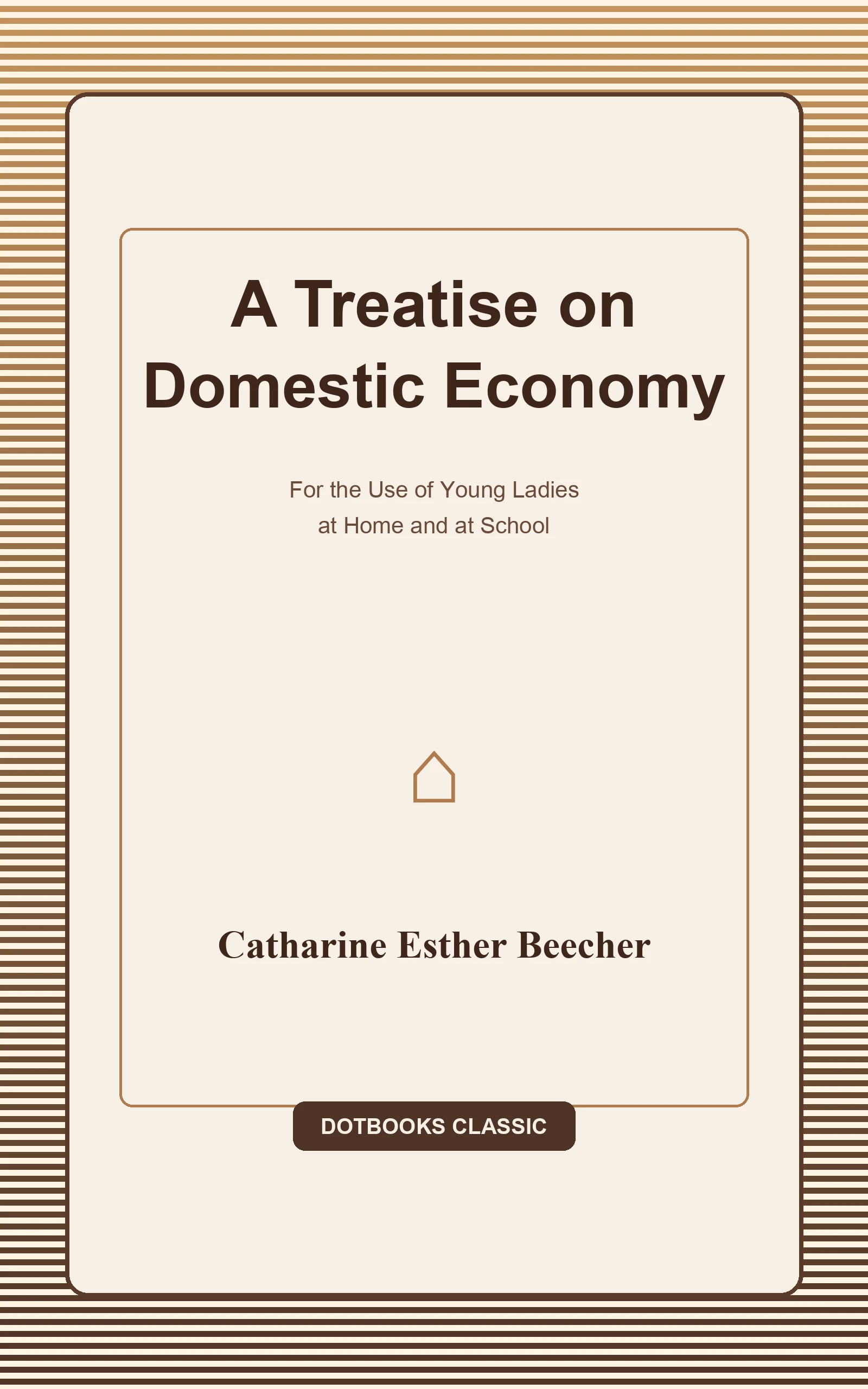 A Treatise on Domestic Economy; For the Use of Young Ladies at Home and at School
You might also like
Readers who picked this also reached for.



Picking up where you left off